On 30 January 2018 we set off from Frankfurt on a round trip through Southeast Asia. One important note before we start: all the prices I mention here are what we paid in 2018. Some things look very different today – a few have become a lot more expensive, others are actually cheaper. Wherever I've checked, I've added today's price as well (as of September 2026).
Getting There – A Night at the Airport Instead of a Stressful Morning
Our flight left at 10 in the morning. From our place to Frankfurt Airport it's about 280 km, which usually takes around three hours. We didn't fancy that kind of stress on departure day, so we travelled up the day before.
Through Parken und Fliegen we booked the H+ Hotel Frankfurt Airport West. That had several advantages. First, the hotel is only around 15 km from the airport. Second, the shuttle to the terminal was free. And third, parking for our two-week trip was already included in the room rate. Back then we paid €110 for the double room; today prices start at €140 a night.
Find an airport hotel with parking →
We found our flight on momondo. To be honest, I can't remember which platform we eventually booked through. What I do remember clearly: it was an Oman Air flight with a stopover in Muscat, and it cost us just €419 per person – return, mind you. Around 16 hours later we'd swapped cold Germany for sweltering Bangkok.
Bangkok – Landing and Getting Over the Time Difference
Back then, eSIMs as we know them today didn't exist yet. Today we'd sort one out before the trip, for example from Simbye, Airalo or GigSky. That way you're online the moment you land and don't have to hunt for a SIM card at the airport.
To get to our hotel, the Admiral Suites Bangkok, we took the Airport Rail Link and then the BTS Skytrain. Back then we paid exactly €100 for two nights in a double room. Today you'll pay from €129 for both nights, without breakfast and without free cancellation. The hotel is really central, on Soi 22, a side street off Sukhumvit Road, between two lovely parks: Benjakitti Park and Benjasiri Park. Asok and Phrom Phong BTS stations are each about a 15-minute walk away.
View the Admiral Suites Bangkok →
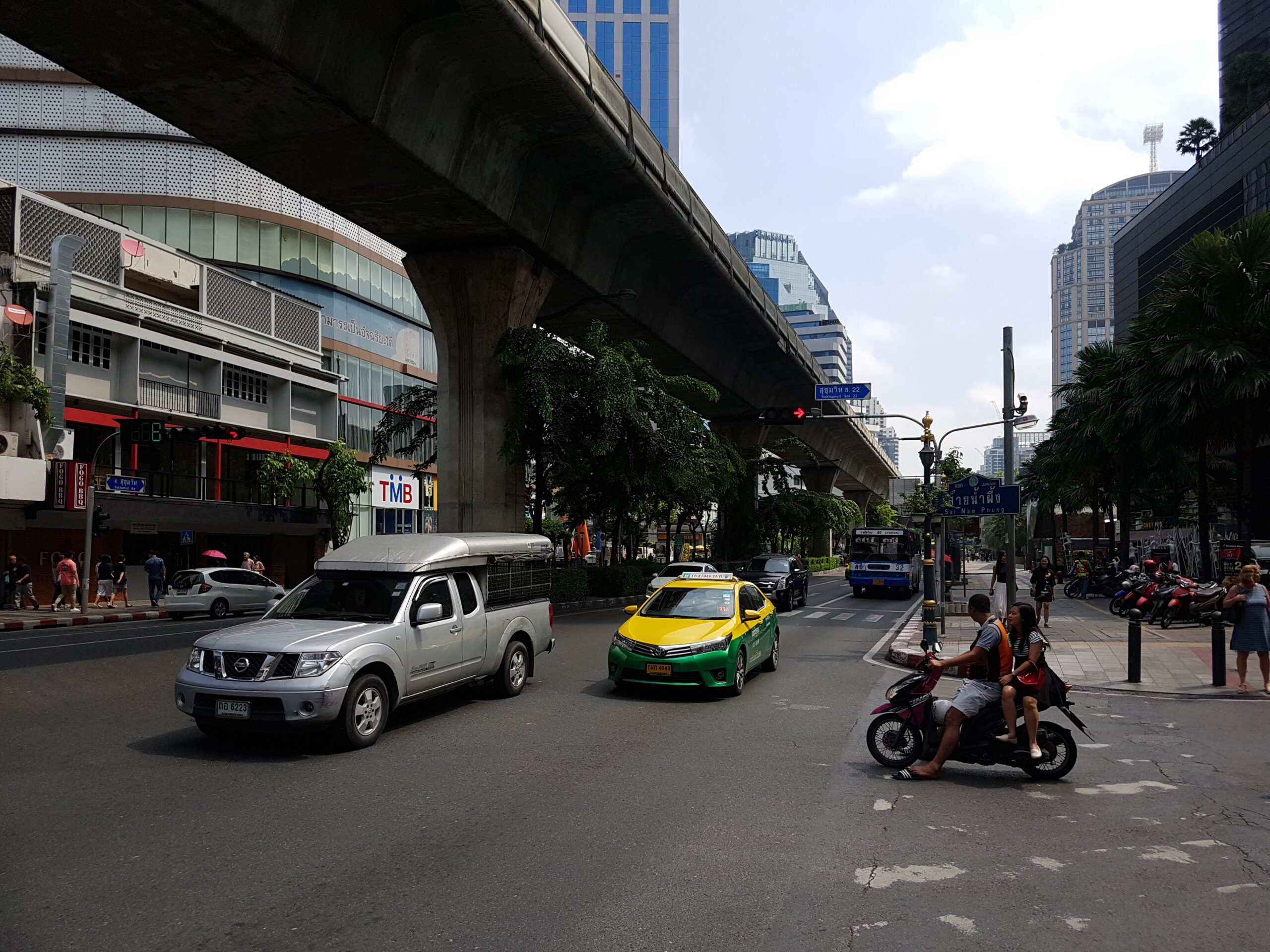
After two days of acclimatising and adjusting to the new time zone, we moved on to Cambodia on day three.
On to Siem Reap – Train or Bus?
Our next stop was Siem Reap. We were on a budget back then and weighed it up: train or bus? The train would have been dirt cheap. In third class we'd have paid the equivalent of less than €1.50 to Aranyaprathet on the Cambodian border. But that leg alone takes five to six hours, and from the border we'd have had to sort out onward transport ourselves.
So we went for the bus, which runs straight across the border to Siem Reap. The journey usually takes around nine hours. Back then we paid the equivalent of around €24 per person one way. The seats were noticeably roomier than you'd expect, the backrests reclined a long way, and there was even Wi-Fi.
Crossing the Border on Foot
We had to cross the border between Thailand and Cambodia on foot. Just before it, we were asked to get off the bus with our passports. After a walk of around 300 metres and a short stop at immigration, where we got our visa on arrival, we were in the Kingdom of Cambodia. On the Cambodian side, our bus was already waiting for us.
Arriving in Siem Reap – and Suddenly We Had a Driver
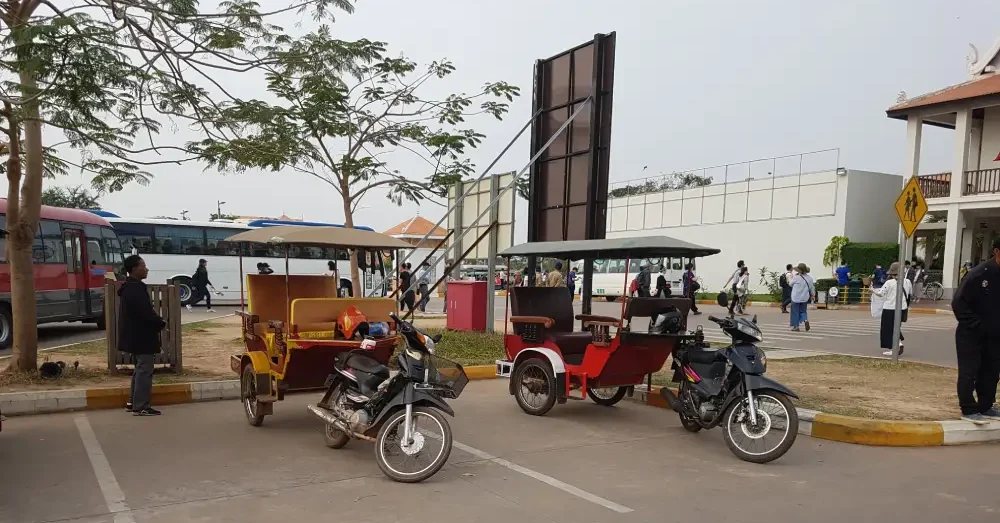
In Siem Reap the bus dropped us at a sort of collection point, and from there we had to make our own way to our accommodation. Countless drivers were waiting with their remorques – Cambodia's tuk-tuks: motorbikes with a trailer that usually seats two to four people. We were completely caught off guard because we had no idea what to expect. Depending on where you were staying, you were assigned a driver who then took you there.
On the way, our driver offered to be booked for our whole stay: he'd take us anywhere and pick us up again. We paid US$20 (around €17) per person for that. Whenever we needed him, he was there.
First he took us to our accommodation, the Siem Reap Pub Hostel. We'd booked it through booking.com: two nights in a twin room for €44 in total. Today you can even get two nights in February from €20.
View the Siem Reap Pub Hostel →
Our First Evening on Pub Street
We asked our driver to wait briefly while we checked in and took our bags up to the room. Then we headed to Pub Street for something to eat and drink. Cambodia was almost unbelievably cheap back then: dinner with a drink could be had for under €2.
Pub Street was where I first came across scorpions and snakes on skewers, sold fried or grilled to tourists. The scorpion skewers are mainly a photo op. But it's not entirely made up: fried insects and even tarantulas are eaten as a snack by locals in Cambodia too. It just has little to do with classic Khmer cooking.
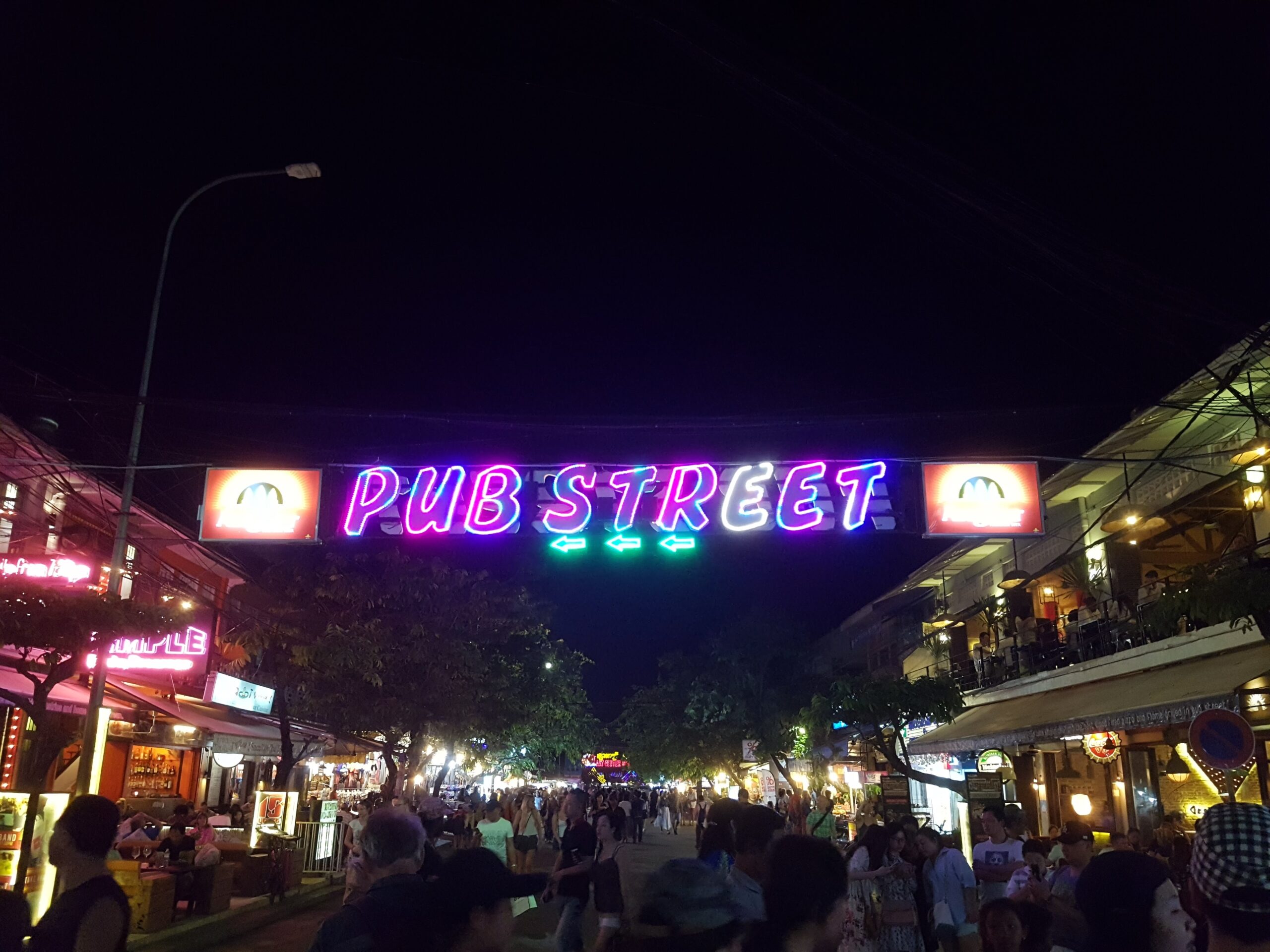
Khmer Food – Milder Than You Might Think
- Milder: Compared with Thailand or Laos, food in Cambodia is usually less spicy.
- Flavours: Instead of heat, fresh herbs such as lemongrass, citrus notes and sour-sweet flavours take centre stage.
- Staples: Rice and fish form the base of many dishes, along with vegetables, meat and poultry.
- Influences: The cuisine shows influences from China, India and the French colonial era – which is why baguettes are a common breakfast.
What we ate: lok lak. Honestly, back then we had no idea what the dish was called. It still ended up on our plates twice. Lok lak is one of Cambodia's best-known dishes: quickly seared, marinated beef on lettuce, tomato and cucumber, served with rice and usually a fried egg on top. The best part is the dip of lime juice, salt and Kampot pepper, which gives the whole thing a fresh, peppery kick.
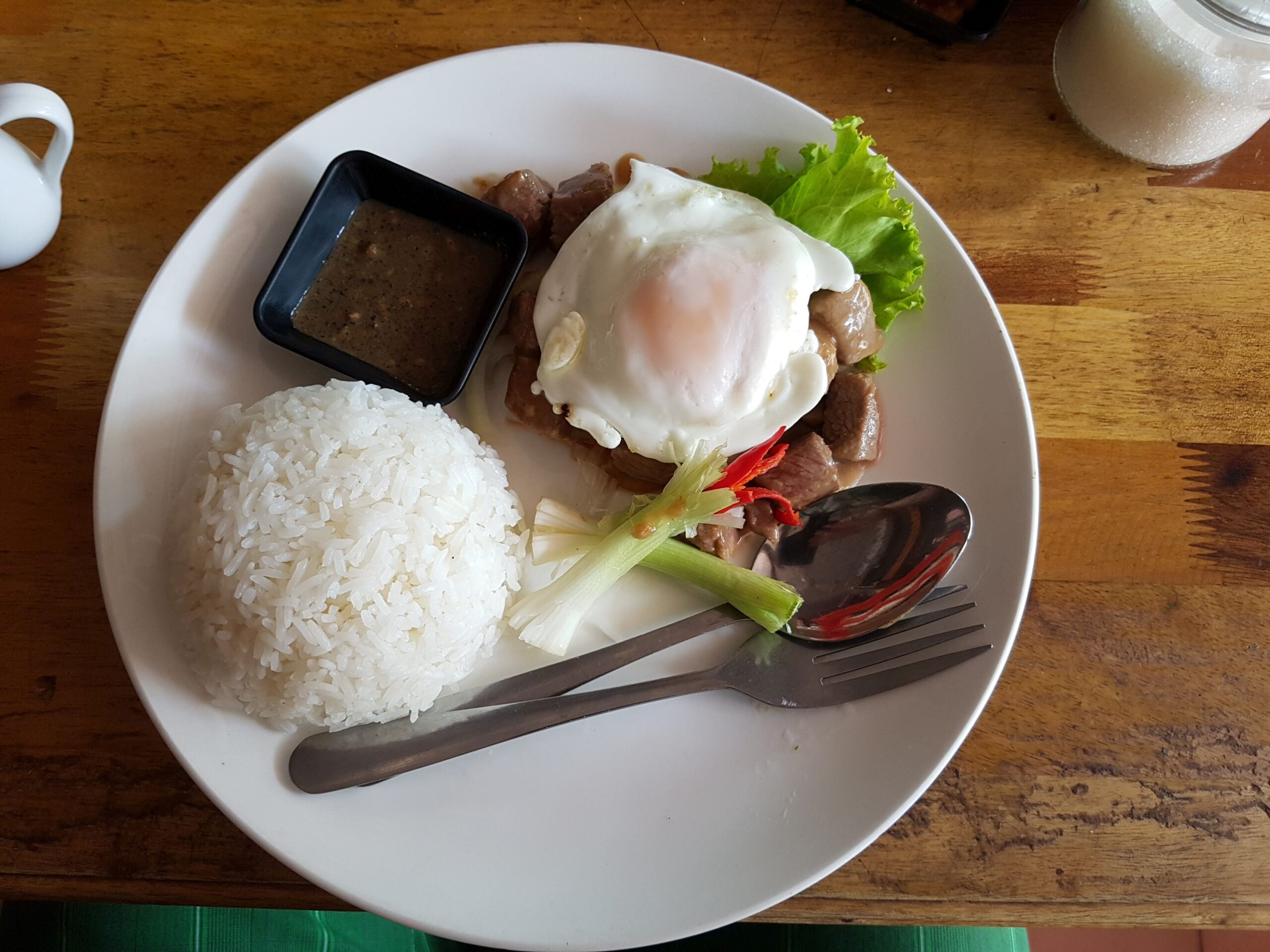
Angkor Wat – An Early Start for the Most Famous Temple
The next morning our driver picked us up early from the hostel, as we'd arranged the evening before. On the agenda: one of the most famous temples in the world, Angkor Wat.
Today you can buy tickets online on the official Angkor Enterprise website (information link only, not a partner link) or at the official Angkor Ticket Office on Road 60, about 4 km outside Siem Reap. Back then we bought ours at the ticket office. A one-day pass costs US$37 (around €32) per person; children under 12 go free. Only buy from these two sources – tickets from anyone else aren't valid.
From our accommodation via the ticket office to Angkor Wat was around 12 km. With our driver and his remorque, we were there in about 50 minutes, ticket purchase included.
The Angkor Archaeological Park covers around 400 square kilometres, so you obviously can't see it all. Like most visitors, we focused mainly on Angkor Wat itself. It's incredible what people were capable of back then. The fine detail carved into the stone in particular seems almost out of this world. And all that around 900 years ago.
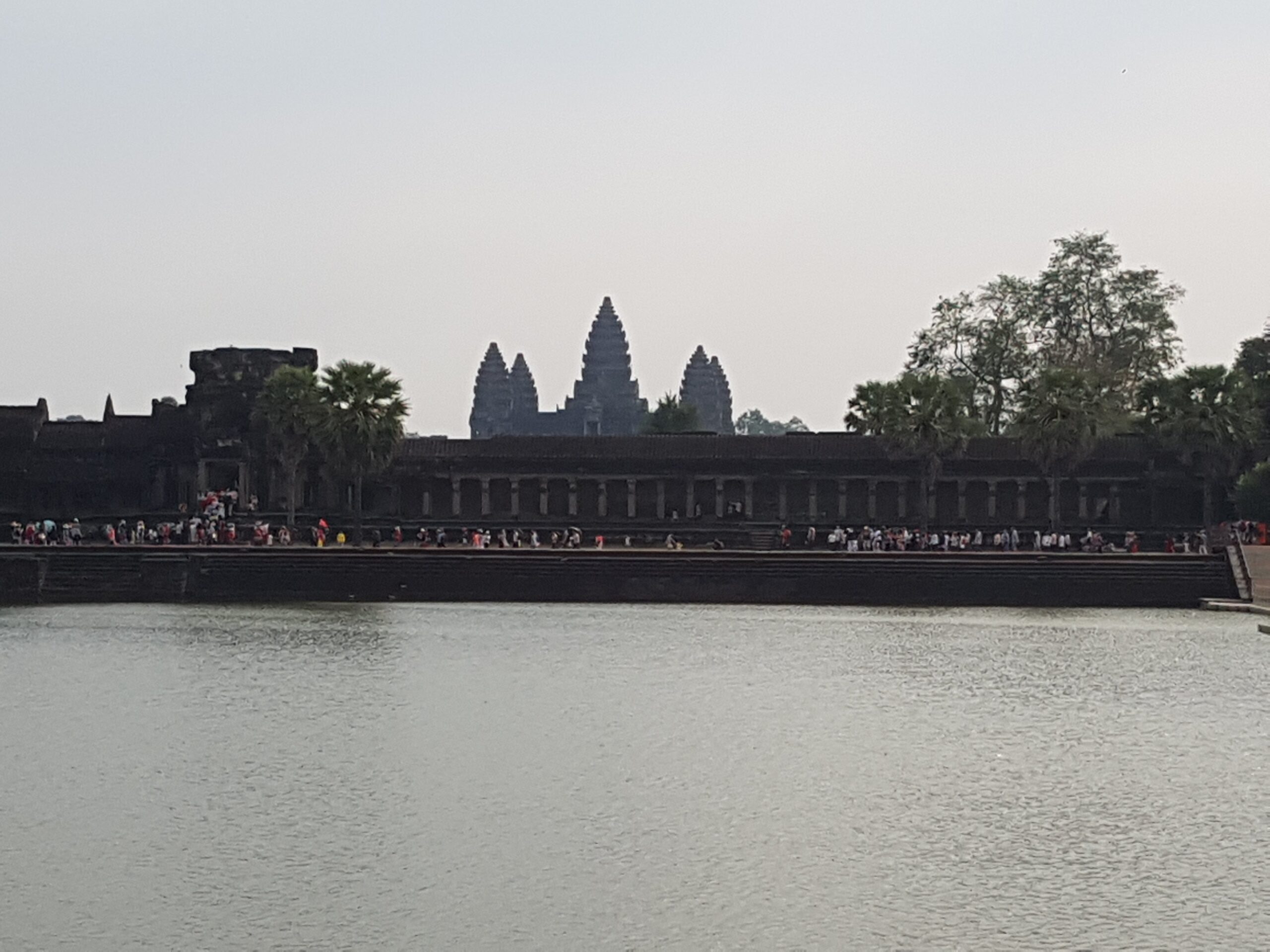
Our driver waited for us the whole time and took us on to the next temple after every visit.
Angkor Thom – The Baphuon
Next up was Angkor Thom, the last great capital of the Khmer Empire, where we visited the Baphuon. Even the approach is something special: you walk along a raised stone causeway around 200 metres long, resting on short pillars, straight towards the pyramid-shaped temple. It dates from the mid-11th century. Its story is almost crazier than the building itself: French archaeologists took it apart stone by stone to restore it, then the civil war broke out and the plans were lost. Rebuilding it without plans took 16 years and is often called one of the world's biggest jigsaw puzzles. The Baphuon has been open again since 2011.
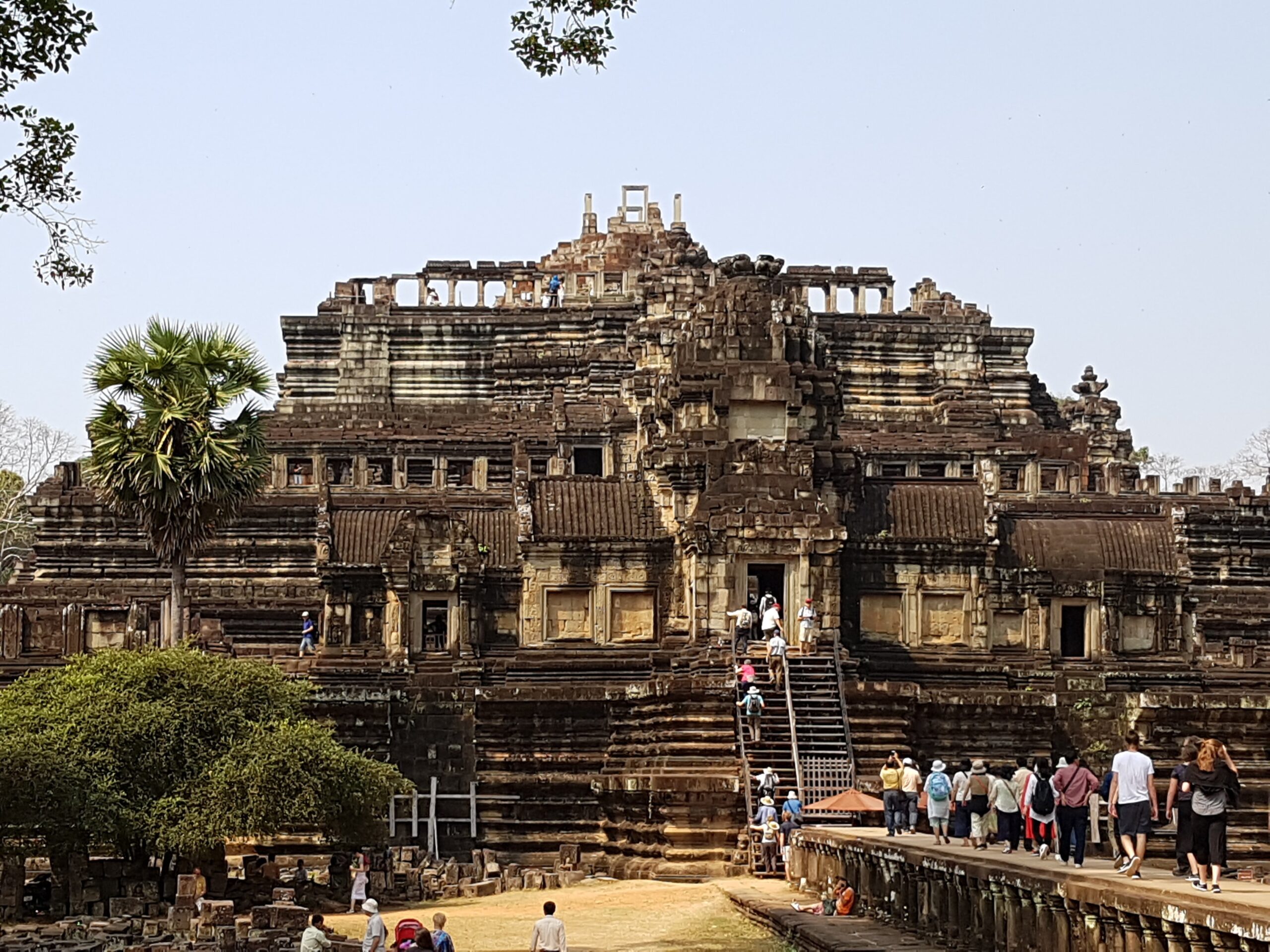
The Terrace of the Elephants
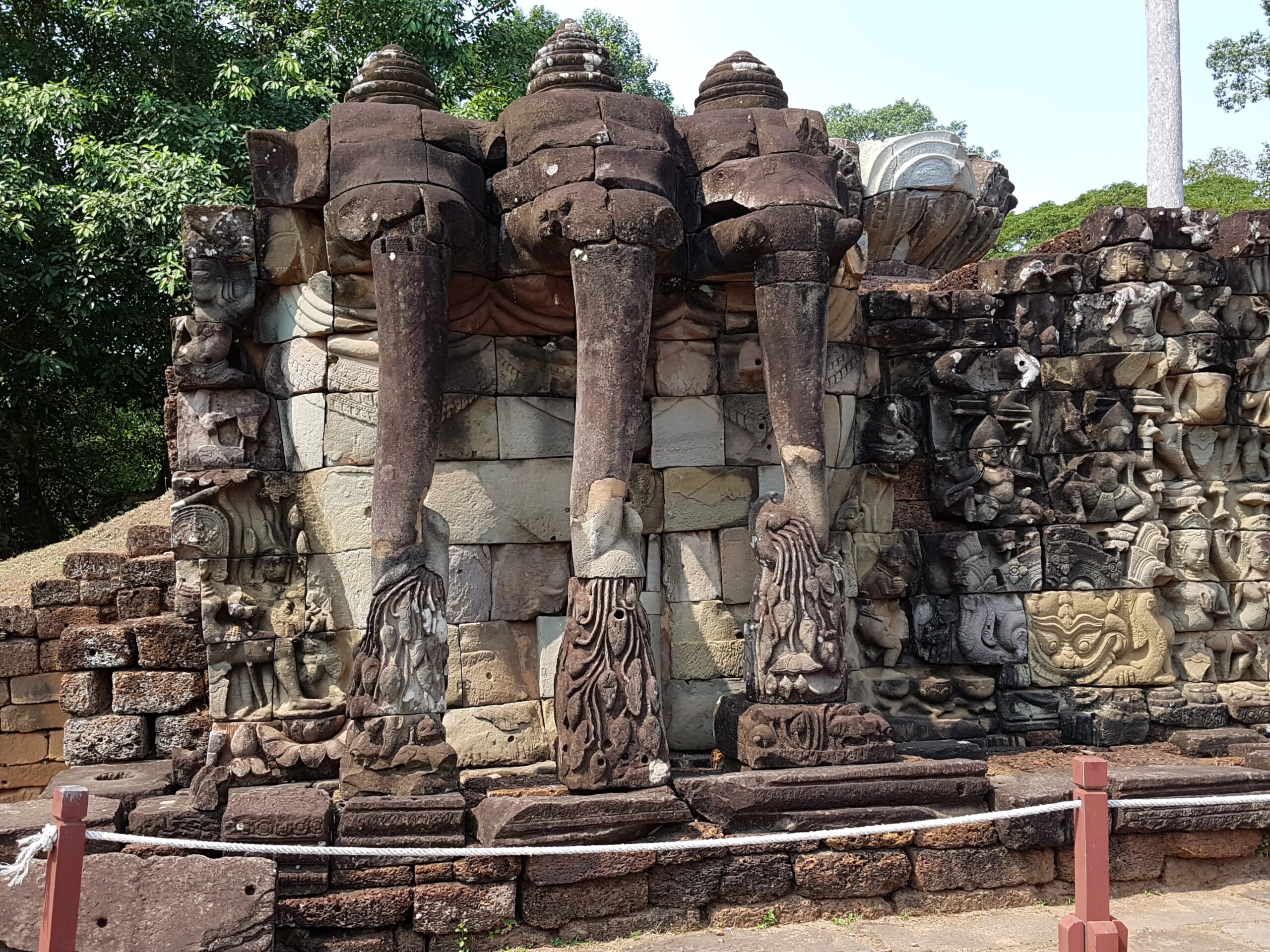
Right next door is the Terrace of the Elephants, around 350 metres long, from which the king watched ceremonies and his troops. A real highlight is the three-headed elephant at the northern end, its trunks picking lotus flowers.
Ta Prohm – The Tomb Raider Temple
Our last stop was Ta Prohm, about a kilometre east of Angkor Thom. This is where "Lara Croft: Tomb Raider" with Angelina Jolie was filmed in 2001. In the early 20th century, French archaeologists deliberately left Ta Prohm largely as they had found it: huge tree roots wrap around the walls, corridors have collapsed and paths are blocked by fallen stone. It's no longer entirely left to its own devices, though – these days it's being stabilised and partly restored.
My favourite sight was a mighty tree rising out of the masonry, roots and all. It makes you feel the sheer power of nature, which will one day reclaim everything. And there's something rather special about standing where Hollywood once filmed.
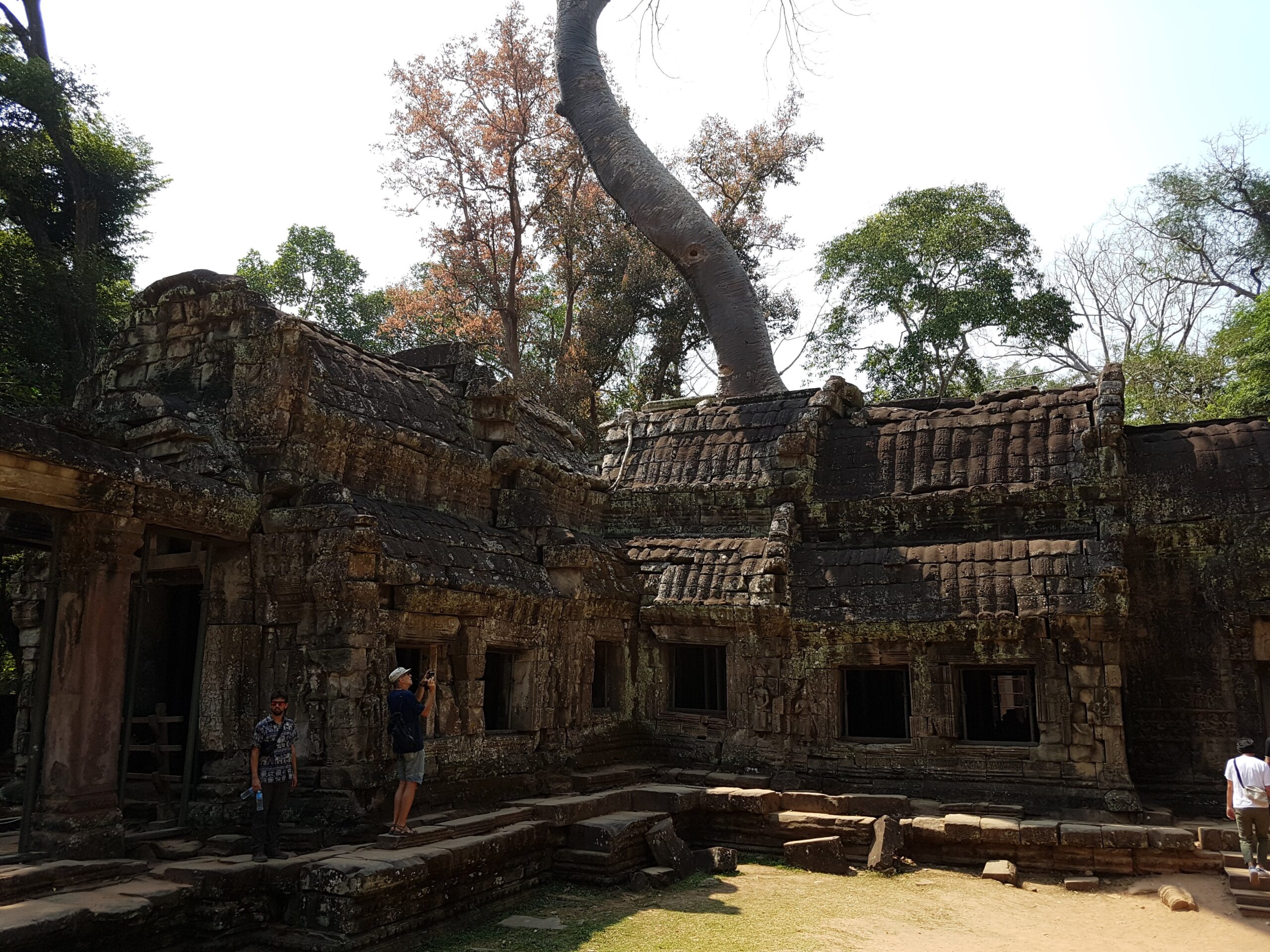
Important: wear good, sturdy shoes. Even though the temple is gradually being restored, you need to watch where you step. At least that was the case when we were there.
Remember to drink plenty. It gets very hot in Cambodia too, and at the temples you're out in the sun pretty much all day.
A Souvenir That Still Hangs on My Wall
After a quick bite back at the hostel, our driver took us to Pub Street once more in the evening. That night was all about souvenir shopping. One painting caught my eye straight away: Angkor Wat at sunrise or sunset, in shades of red, yellow and orange, 120 x 80 cm. It still hangs above the bed in my bedroom today, reminding me of this trip.
An Early Morning Ride to the Airport
The next morning our driver picked us up early with our luggage and took us to what was then the international airport, around 9 km away. Remorques are open, with no windows, and early in the morning the wind makes it surprisingly chilly. So put on something with long sleeves.
Our next stop: the capital, Phnom Penh. More on that in Part 2.
What this leg cost
| Item | for | Price |
|---|---|---|
| H+ Hotel Frankfurt Airport West, 1 night in a double room, incl. 2 weeks' parking and shuttle, via Parken und Fliegen | 2 people | €110.00 |
| Flight Frankfurt–Bangkok with Oman Air via Muscat, return, €419 p.p., found on momondo | 2 people | €838.00 |
| Admiral Suites Bangkok, 2 nights in a double room | 2 people | €100.00 |
| Direct bus Bangkok–Siem Reap, one way, around €24 p.p. | 2 people | approx. €48.00 |
| Remorque driver for our whole stay in Siem Reap, US$20 p.p. | 2 people | approx. €34.00 |
| Siem Reap Pub Hostel, 2 nights in a twin room, via booking.com | 2 people | €44.00 |
| Angkor one-day pass, US$37 p.p. | 2 people | approx. €64.00 |
All in, around €1,240 for the two of us, covering the hotel and parking in Frankfurt, the long-haul flights, two places to stay, the bus to Siem Reap, our driver and the temple passes. By far the biggest item is the flights. Not included: the visa, food, the souvenir painting and the onward flight to Phnom Penh, as I no longer have complete figures for those. US dollar amounts are converted at €1 ≈ US$1.15 (as of September 2026); the bus fare was already converted at the time.
All booking links at a glance
- Airport hotel with parking: Parken und Fliegen
- Flights: momondo
- eSIM Thailand: Simbye · Airalo · GigSky
- Accommodation Bangkok: Admiral Suites Bangkok
- Accommodation Siem Reap: Siem Reap Pub Hostel
- Angkor passes: Angkor Enterprise (official site, not a partner link)
Part 2 takes us on to the capital, Phnom Penh – more on that soon.
And if reading this left you thinking "I'd love a route like that, just without having to piece it together myself" – that's exactly what I do. The first conversation costs nothing.